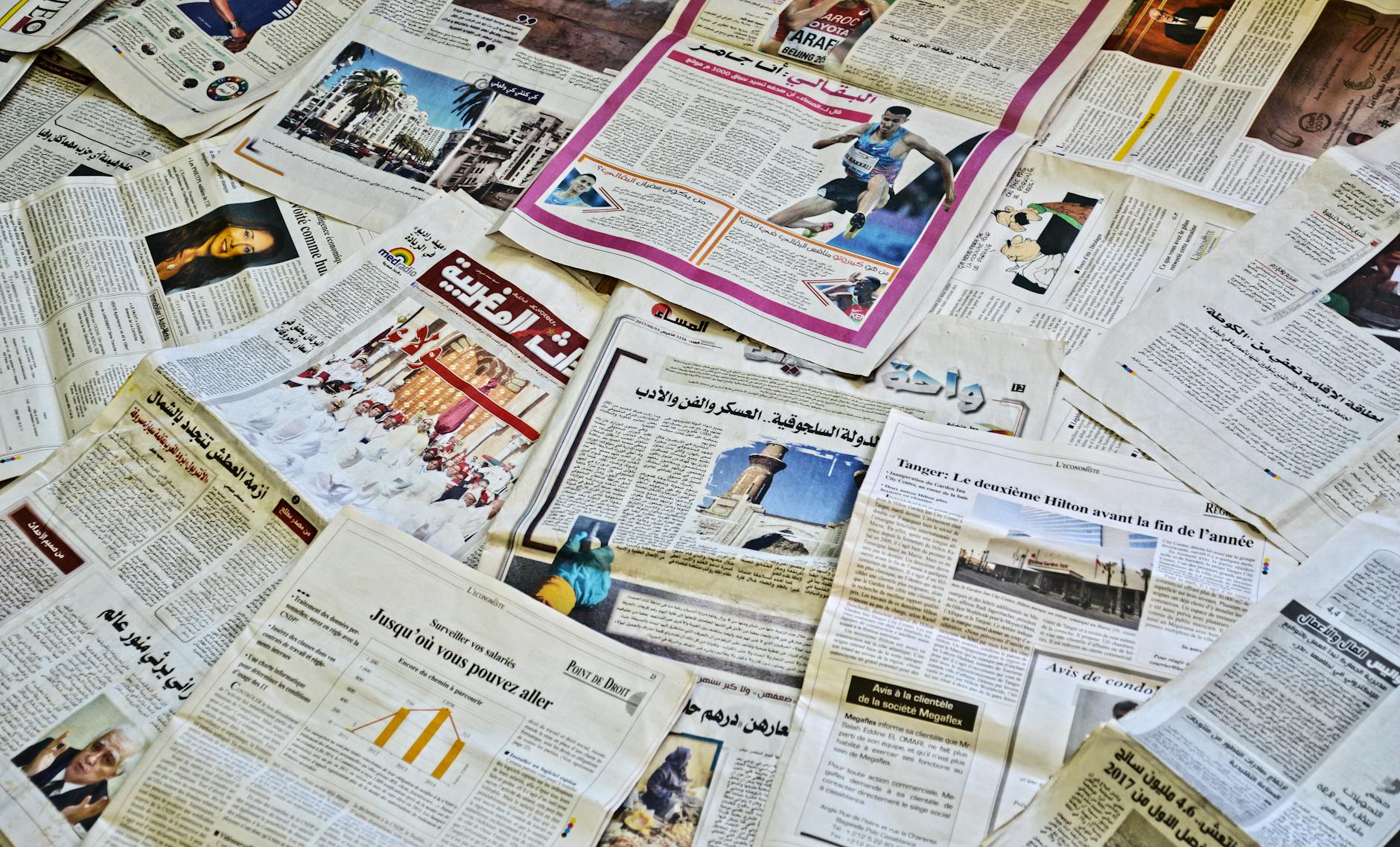
Journalism has been around for hundreds, if not, thousands of years and has arguably been a vital part of human society. Think about it—if it weren’t for the press, democracy wouldn’t be as popular as it is. News and awareness of ongoing events would be nonexistent; how are we to learn from history if we aren’t aware of its existence? Journalism has propelled the human species to be as advanced as it is today, but just as how the human species and our capabilities have changed over time, so has journalism and its business model.
According to Britannica, a digital encyclopedia, journalism originally started in 59 BC. As journalism grew over the years, it led to an increase in literacy and knowledge. By the 20th century, inventions such as satellites and the internet led to the explosion of journalism and media; information was now accessible simply by a few keyboards clicks. With this increase in popularity for journalism, it brought on its own careers as journalism became its own profession and field of work; journalism has no longer become about sharing information with one another, but each news company has essentially become a business of its own. Competition and profit are very real concerns within the industry nowadays as to quote Britannica, “21st-century journalism faced an information-saturated market in which news had been, to some degree, devalued by its overabundance.”
In recent years, this issue has become extremely concerning as various independent news outlets across the country, especially those within smaller, more rural areas, have been forced to close their business as it has become unprofitable to continue to produce news. In the Media Literacy class, we looked at several examples of this issue as a 60 Minutes broadcast touched on various outlets in South Carolina having to close business; we also viewed commentary from John Oliver, in which he notably discussed how much of the media world has become more limited and condensed as some media outlets have even been bought by rich, corporate giants.
The existing and potential consequences of these losses to journalism are tremendous. For one, because we’re losing so many smaller news sources and media outlets, information has become more funneled and less variable. In turn, this can lead to less media literacy, less understanding, more misinformation, etc. According to a study done by Middle Tennessee State University, more than two local news outlets are closed each week. For those living in smaller or more rural towns, this can also lead to corruption as local politicians may take advantage of this vacuum to control the narrative.
As it stands, it seems that this issue is snowballing and is out of our hands. However, change is possible, and it starts with our own culture and how we view journalism. In his 2016 White House Correspondent’s Dinner speech, which we watched in class, then President Barack Obama discussed how we can make new models of equitable infrastructure, make political institutions more open to allow people to speak up, and allow people to tell their stories more openly. This is a global, collective effort in which we must be more cognizant and encouraging companies to change their ways; as people and consumers, we should also change our behavior and be critical of the news we read.
Nowadays, hate and anger have become so normalized. When comparing political debates from a few decades ago to nowadays, it has become apparent that the latter is now less civil and focuses on attacking one’s character instead of simply disagreeing on one’s beliefs. To address this, we must change our culture that fuels hate, become more informed, and there should be some pressure that should also be placed on the media to do a better job of dividing people less.
 DAWN'S DIARY
Leave a comment